
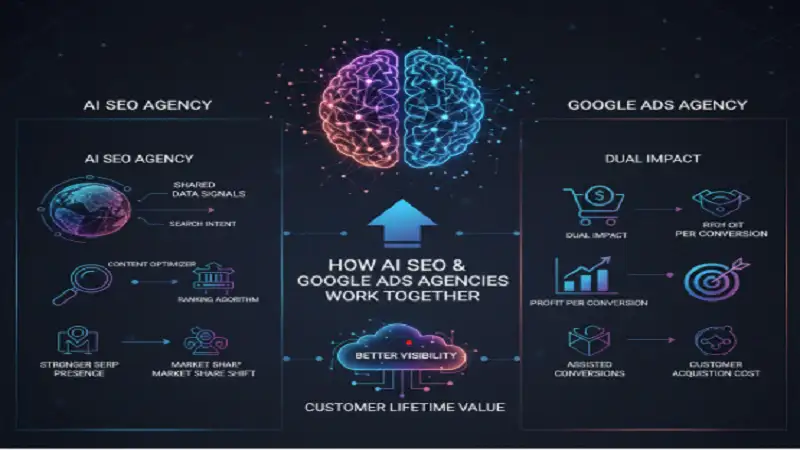
You know how sometimes two great things just click? Like peanut butter and jelly, or a perfectly brewed coffee on a Monday morning. In digital marketing, AI-driven SEO and Google Ads are that perfect pair. They are not rivals fighting for attention. They work together as a powerful team that boosts your brand’s visibility across the search landscape. The future of digital visibility is built on synergy, especially when AI adds intelligence and efficiency to both sides.
Organic search builds long-term authority and trust. Paid search delivers instant visibility and precise targeting. When the two collaborate, the results are multiplied. An integrated strategy uses the strengths of each to create a strong, consistent, and highly visible online presence. It is not just about showing up. It is about owning your space.
Shared Data Signals
Data is at the core of this partnership. AI-powered SEO tools and advanced Google Ads platforms both rely on understanding user behavior, search intent, and performance metrics. They constantly collect insights, but when they share them, the real magic begins. It is like giving two expert detectives access to each other’s case files so they can solve the problem faster and more accurately.
Keywords
Keywords are foundational for both SEO and Google Ads. SEO uses them to create content that ranks organically, while Google Ads uses them to bid for instant visibility with measurable performance data.
When both teams exchange keyword insights, efficiency improves dramatically. At Growth Pulse Digital Marketing Agency, this shared data approach helps identify high-performing keywords that drive both organic growth and profitable paid campaigns.
At the same time, SEO often uncovers long-tail opportunities and low-competition trends that paid teams can target cost-effectively. A strong Google Ads Agency uses this combined data to strengthen keyword selection, refine campaigns, and enhance overall adword management services. The feedback loop keeps both areas aligned and continuously improving.
Search Intent

Understanding why someone searches is just as important as knowing what they search for. Search intent guides both organic content and paid ads. AI-driven SEO tools analyze patterns to determine whether a user wants information, a product comparison, or to make a purchase. Effective google ads management also depends on matching ad copy and landing pages to the right intent.
Informational searches are perfect for blogs or guides. Transactional intent calls for ads and product pages. When SEO and Ads teams collaborate, they align messages, match landing pages to intent, and ensure both organic and paid experiences meet the user where they are. High-performing ad copy can inspire compelling meta descriptions, and strong organic pages can become ideal destinations for ads. This alignment improves conversions and strengthens brand consistency.
Dual Impact
When SEO and Google Ads work together, the impact expands far beyond individual channels. It creates a dominant, cohesive presence across the search engine results page.
Stronger SERP Presence
Imagine a user searching for a keyword relevant to your brand. They see your ad at the top and your organic listing immediately below it. This dual presence reinforces authority, boosts trust, and significantly increases click-through rates. Studies often highlight that brands appearing in both paid and organic results outperform those relying on only one approach. It acts as brand reinforcement and increases the chances of winning the click.
This also creates stability. If organic rankings fluctuate, ads maintain visibility. If ad budgets shift, organic rankings continue delivering traffic. Paid campaigns also offer insights that strengthen SEO, such as identifying winning ad copy or landing page structures. On the other hand, high-performing organic content often becomes an ideal landing page for ads. A proactive Google Ads Agency looks for these opportunities to expand overall SERP dominance and build a stronger digital footprint.
Key Takeaways
AI-powered SEO and Google Ads complement each other and work best when integrated.
Shared data signals improve keyword selection, targeting, and messaging.
Google Ads provides real-time insights that accelerate SEO decision-making.
SEO discovers long-term opportunities that can power more cost-effective paid campaigns.
A combined organic and paid presence significantly boosts authority and click-through rates.
Integrated strategies create a strong, consistent, and future-proof online presence.
Conclusion
The search landscape evolves rapidly, and staying ahead requires collaboration rather than siloed efforts. Combining AI-driven SEO with strategic Google Ads campaigns creates a powerful ecosystem that captures immediate attention while building long-term authority. It is about working smarter, leveraging every insight, and ensuring your brand is not only visible but trusted. The future of digital marketing is not about choosing one channel. It is about owning the entire search experience.