
The excitement of a home renovation usually peaks right before the demolition begins. You have selected your new materials, finalized the layout, and are ready to watch the old, outdated surfaces disappear.
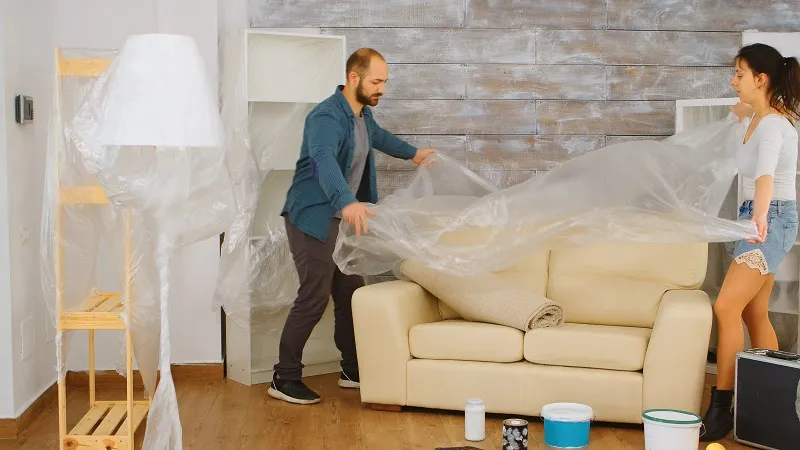
But when the contractor arrives to rip up your old ceramic kitchen floor, the preparation often looks alarmingly primitive. They tape a few sheets of thin plastic over the doorways, cover the countertops with drop cloths, and fire up the jackhammers.
If you are renovating a home in a cooler, high-altitude climate—like the crisp, pine-scented air of Baguio—simply throwing open every window and door to ventilate demolition dust isn’t always a practical or comfortable option. You want to keep the mountain chill out, which means your house is essentially a sealed envelope. When you shatter ceramic and grind down concrete thinset inside a closed envelope, you are creating a microscopic nightmare that plastic sheeting simply cannot contain.
The Physics of the Dust Particle
To understand why the plastic tarp method fails, you have to look at the physics of the dust being generated.
When a chipping hammer strikes a ceramic tile and the underlying mortar, it doesn’t just break the material into chunks. It pulverizes a portion of it into an incredibly fine powder. The most dangerous component of this powder is crystalline silica.
These silica particles are microscopic—often measuring less than 10 microns in diameter, which is roughly 100 times smaller than a grain of sand. Because they are so small and incredibly light, they do not fall straight to the floor. They become aerosolized, suspended in the ambient air currents of your home for days or even weeks.
The Illusion of the Tarp
Hanging a plastic sheet with blue painter’s tape creates a visual boundary, but it does virtually nothing to stop aerosolized silica.
Houses are dynamic pressure systems. Every time a door opens, a gust of wind hits the roof, or your HVAC system kicks on, the air pressure inside the rooms shifts. This causes the plastic tarps to billow and pull away from the walls. Microscopic dust effortlessly rides these air currents through the smallest gaps in the tape, underneath door sweeps, and through the electrical outlets.
Furthermore, the dust is highly abrasive. If you rely on high-end graphic design monitors, expensive camera gear, or sensitive electronics in your home office, this airborne silica will eventually settle on your screens. When you go to wipe it away, the microscopic jagged edges of the concrete dust act like sandpaper, leaving permanent micro-scratches across your expensive equipment.
The HVAC Distribution Network
The most critical failure of the tarp method involves your home’s central nervous system: the HVAC ductwork.
Unless the contractor completely seals every single return vent in the demolition zone—and shuts the entire system off for the duration of the project—the HVAC system acts as a massive vacuum. It sucks the aerosolized silica directly out of the kitchen, pulls it through the furnace filter (which is rarely rated to catch particles that small), and blasts the concrete dust into every single bedroom and living space in the house.
You can tape up the kitchen doorway perfectly, but the ductwork will seamlessly transport the mess right past your plastic barricade.
Capturing the Dust at the Source
The architectural and high-end remodeling industries have realized that trying to contain dust after it is airborne is a losing battle. The only way to protect a home’s air quality, electronics, and respiratory health is to prevent the dust from becoming aerosolized in the first place.
This requires abandoning the plastic tarps in favor of source-capture technology. Modern dustless tile removal utilizes specialized chipping hammers and floor grinders that are physically shrouded and connected to massive, industrial-grade HEPA vacuums.
As the chisel breaks the tile and pulverizes the thinset, the vacuum pulls the microscopic silica directly from the point of impact into a sealed canister before it ever has a chance to hit the ambient air. It removes the chaotic variable of airborne dust entirely.
Conclusion
A beautiful new floor should not require sacrificing the air quality of your home or spending weeks cleaning fine white powder out of your clothing, electronics, and ductwork. The “plastic tarp” is an outdated relic of 20th-century construction. By understanding the physics of how dust travels and demanding modern source-capture technology, you can ensure your renovation remains an upgrade to your living space, rather than a hazard to it.